
Subacromial Impingement
Subacromial impingement, also sometimes called shoulder impingement syndrome, is one of the most common causes of shoulder pain. It occurs when the soft tissue structures within the shoulder become irritated and compressed during arm movement.
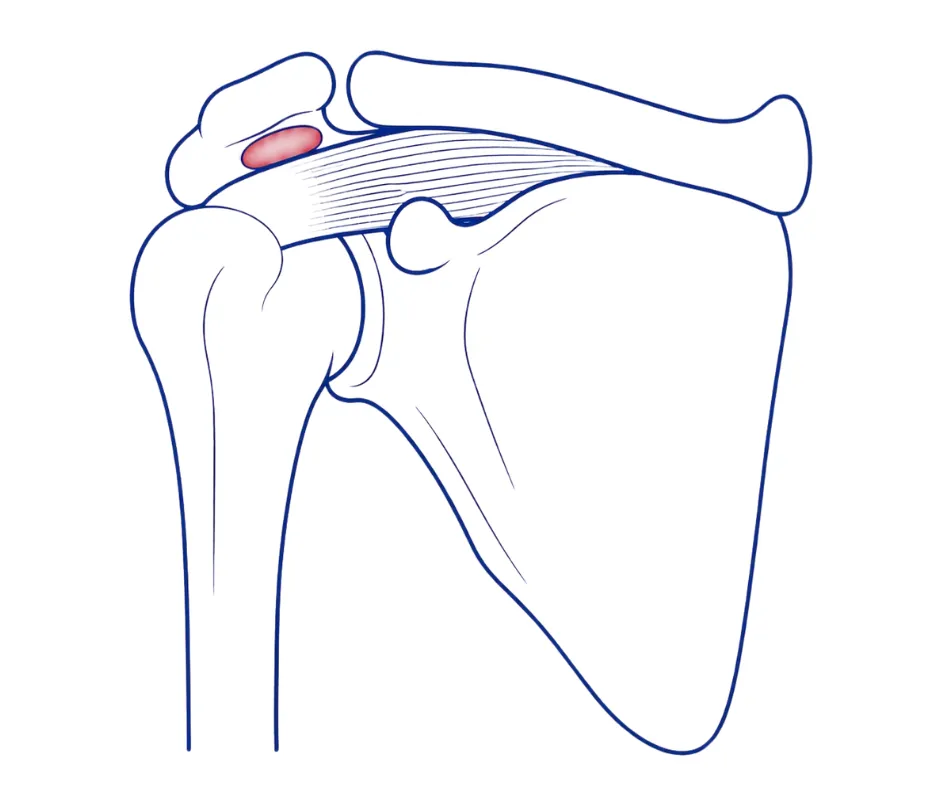
What is a Subacromial Impingement?
Between the top of the arm bone (humerus) and the bony arch above it (the acromion) lies a narrow space called the subacromial space. The rotator cuff tendons and the subacromial bursa (a small fluid-filled sac that reduces friction) pass through this space. When the space becomes narrowed, due to inflammation, bone spurs, or changes in the mechanics of the shoulder, these structures can become pinched or irritated with arm movement, particularly when lifting the arm overhead.
Diagnosis
Diagnosis is primarily clinical, based on your history and a careful examination. X-rays may identify bony changes, and an MRI or ultrasound can assess the condition of the tendons and bursa more closely.
Symptoms
A dull ache in the shoulder, often felt at the outer side or front
Pain when lifting the arm, particularly between shoulder height and overhead
Night pain, particularly when lying on the affected shoulder
Weakness with overhead activities
Treatment Options
Non-Surgical Treatment
The majority of patients with subacromial impingement improve with non-surgical treatment:
Physiotherapy targeting rotator cuff strengthening and posture
Anti-inflammatory medication
Corticosteroid injection into the subacromial space, to reduce pain and inflammation, often providing significant relief and enabling progress with phyiotherapy
Surgical Treatment: Arthroscopic Subacromial Decompression
Where symptoms persist despite adequate non-surgical treatment, Mr Adam may recommend arthroscopic subacromial decompression.
This keyhole procedure involves removing the inflamed bursal tissue and creating more space by shaving away part of the undersurface of the acromion (an acromioplasty). It is performed as a day-case procedure under general anaesthetic.
Recovery
Most patients can return to light activities within two to four weeks, with a full return to normal activity typically achieved within three to six months.
Physiotherapy following surgery is important to optimise recovery.

Contact Us
07521544473
Nuffield Health York Hospital
Haxby Road, York, YO31 8TA
Clifton Park Hospital (Ramsay) York
Bluebeck Drive, Shipton Road, York, YO30 5RA