
Shoulder Dislocation and Instability
The shoulder's exceptional range of movement comes at the cost of inherent vulnerability to dislocation. Shoulder dislocation is the most common large joint dislocation, and once the shoulder has dislocated, the risk of it happening again is significant, particularly in younger, active individuals.
What is Shoulder Dislocation?
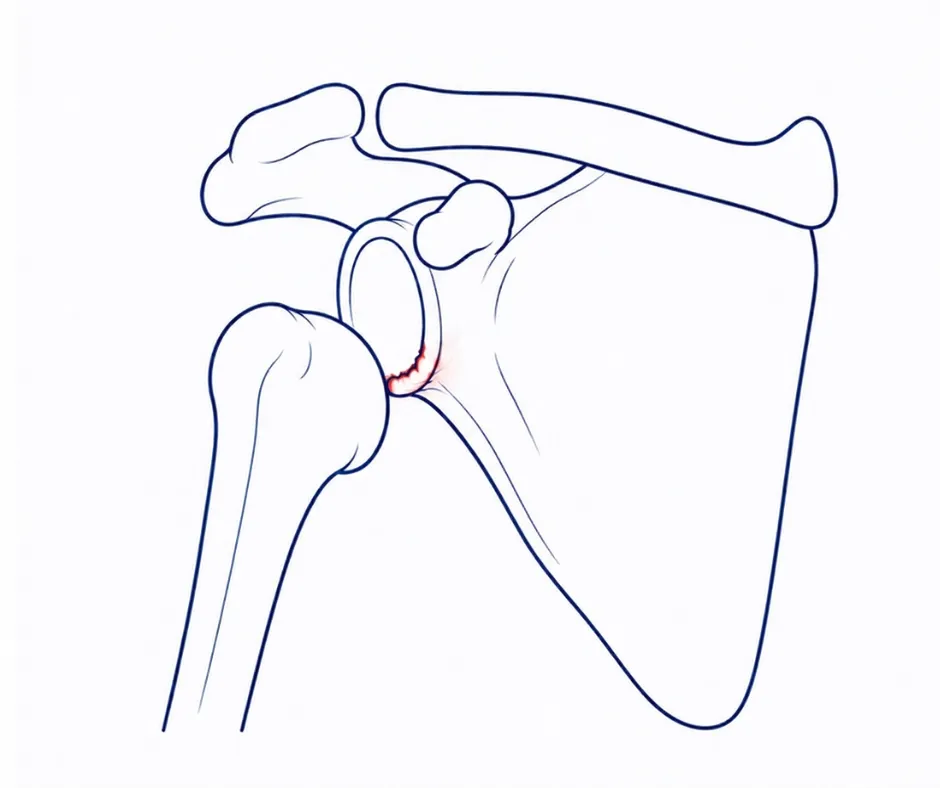
A shoulder dislocation occurs when the ball of the upper arm (humeral head) is forced out of the socket (glenoid). The vast majority of dislocations are anterior, the ball slips forwards out of the socket, typically as a result of a fall or a sporting collision with the arm outstretched.
Following a dislocation, the soft tissue structures that stabilise the shoulder, particularly the labrum (a cartilage ring around the socket) and the glenohumeral ligaments, are often damaged. This can lead to ongoing instability, where the shoulder continues to dislocate or feels at risk of doing so.
Diagnosis
X-rays confirm the dislocation and assess for any associated bony injury. An MRI arthrogram (MRI scan preformed with a contrast injection into the joint) is valuable to assess the labrum as well as the, ligaments, and rotator cuff following dislocation.
Symptoms
Acute, severe pain and obvious deformity at the time of dislocation
After relocation: persistent pain, apprehension, and a feeling the shoulder may 'go again'
Recurrent episodes of dislocation or subluxation (partial dislocation)
Reluctance to place the arm in certain positions
Treatment Options
Non-Surgical Treatment
Following a dislocation, non-surgical treatment, with physiotherapy focused on rotator cuff and scapular strengthening, may be appropriate.
However, the risk of re-dislocation in young, active individuals is high, and surgery may be offered.
Surgical Treatment: Arthroscopic Stabilisation (Bankart Repair)
For some patients Mr Adam may offer arthroscopic stabilisation.
The procedure typically involves a Bankart repair, in which the detached labrum and ligaments are reattached to the glenoid rim using small anchors. This restores the structural stability of the joint through keyhole surgery.
In cases where there has been significant loss of bone from the socket, a different procedure, such as a Latarjet, may be required, and Mr Adam will discuss the most appropriate approach for your specific situation.
Recovery
Following stabilisation surgery, a period of immobilisation in a sling is followed by a graduated physiotherapy programme.
Return to contact sport typically takes six to nine months. The results of arthroscopic stabilisation are generally excellent, with a significant reduction in the risk of re-dislocation.
Contact Us
07521544473
Nuffield Health York Hospital
Haxby Road, York, YO31 8TA
Clifton Park Hospital (Ramsay) York
Bluebeck Drive, Shipton Road, York, YO30 5RA